The Influence of Authority Figures on Obedience and Compliance
30 April 2026
Have you ever followed instructions from someone just because they seemed to be in charge? Maybe it was a boss, a teacher, or even a stranger wearing a uniform? If you nodded your head, you’re definitely not alone. Humans are wired in a way that we often listen to those we perceive as authority figures—sometimes without even questioning why. So what’s going on here?
In this article, we're diving deep into the fascinating world of psychology to understand how and why authority figures have such a powerful effect on our obedience and compliance. Trust me, it's more common and more impactful than you might think.
What Is Obedience and Compliance Anyway?
Let’s start with the basics.- Obedience means following an order or command from someone in a position of authority.
- Compliance, on the other hand, is going along with a request or suggestion—even when you’re not necessarily being ordered to do it.
Picture this: obedience is like a teacher telling you to sit down, and you do it. Compliance is when your friend asks you to do her a favor, and you say "sure" even though you’re not thrilled about it.
Both are forms of social influence, but when an authority figure is involved, something really interesting happens in our brains.
The Power of Perceived Authority
Let’s be real—authority can change the way we behave. It’s like flipping a switch in our heads. But why is that?Well, from early on, we’re conditioned to respect and follow authority. Think about it. As kids, we listen to parents, teachers, and other adults. As we grow up, that pattern sticks. We associate authority with knowledge, responsibility, and trustworthiness.
And sometimes, we follow without a second thought. That’s where things can get a little complicated.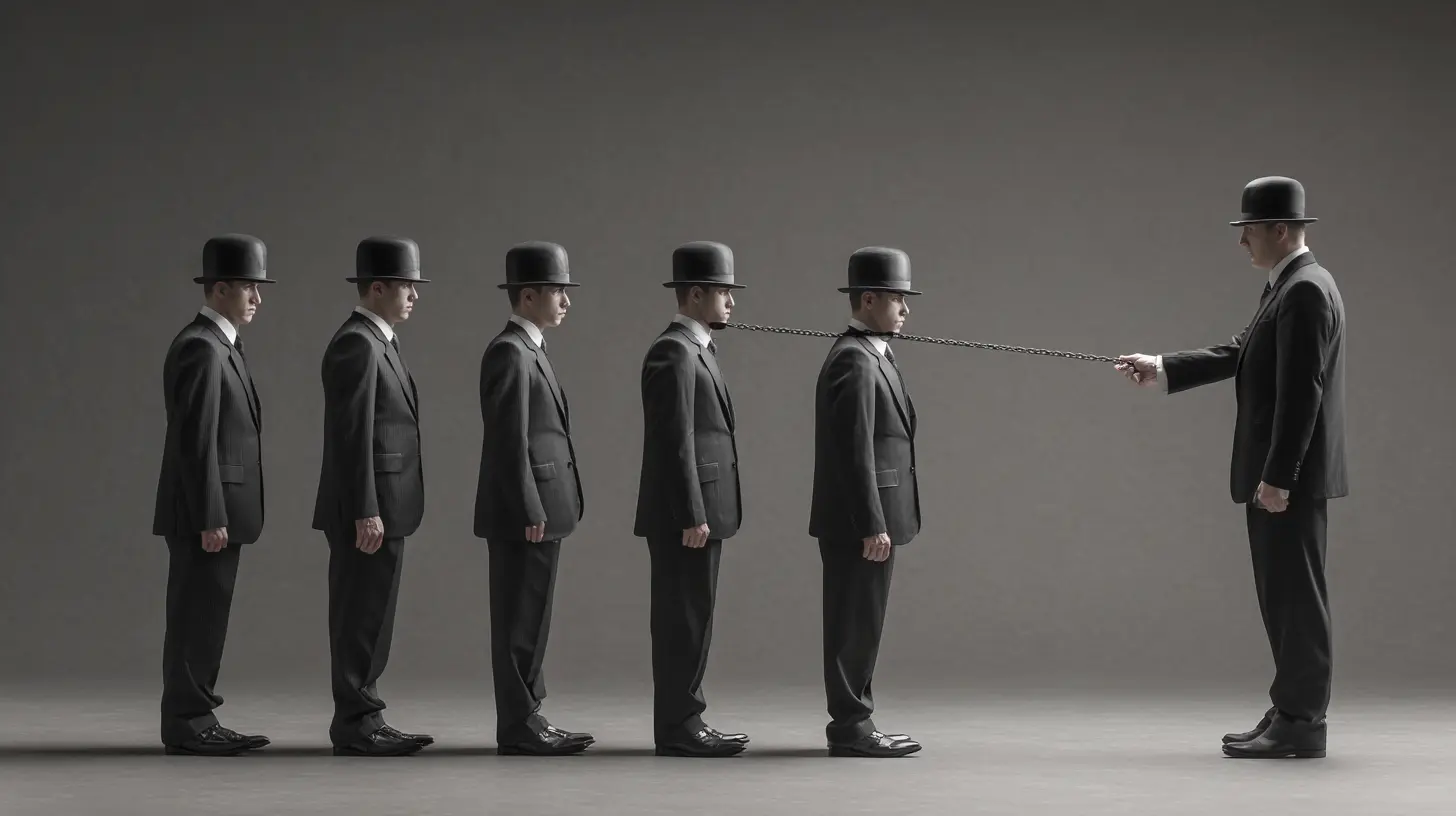
The Famous Milgram Experiment: Would You Shock a Stranger?
We can’t talk about obedience without mentioning Stanley Milgram’s iconic study from the 1960s. It’s basically the blueprint for understanding how far people will go when instructed by someone in charge.Here’s the gist:
Participants thought they were taking part in a learning experiment. Their job was to give an electric shock (not real, but they didn’t know that) to another person every time they got a question wrong. A guy in a lab coat—the authority figure—told them to keep going.
And guess what? Most participants kept delivering shocks, even when the other person pretended to scream in pain. Why? Because someone they saw as an authority told them to.
Shocking… literally and figuratively.
Why We Listen to Authority (Even When We Shouldn’t)
So, what made those people in the Milgram experiment keep going? Why didn’t they just say no?1. Legitimacy of Authority
If someone looks the part—think uniforms, credentials, lab coats—we’re more likely to obey. It’s human nature to connect appearance with credibility.2. Fear of Consequences
Sometimes, we obey because we think saying no will lead to punishment or disapproval. It might be subtle—like losing your job—or more direct, like getting yelled at.3. Socialization
Obedience is baked into our upbringing. We've been taught since childhood that "good" people respect authority. So, going against that can feel... wrong. Even if it's the right thing to do.4. Diffusion of Responsibility
When someone else is giving the orders, we feel less responsible for what happens. “I was just following orders” becomes an easy excuse—even if the outcome is harmful.But here's the thing: this switch in our minds doesn't mean we're bad people. It just means we're human.
The Dark Side of Obedience
Sure, obedience can keep things organized. We need structure in society, right? Imagine if no one listened to traffic laws or emergency responders.But blind obedience can be dangerous when it causes harm or encourages unethical choices.
Let’s look at a few real-world examples:
- Nazi Germany: Many soldiers claimed they were “just following orders.” It’s a chilling reminder of how dangerous unchecked obedience can become.
- Corporate scandals: Employees may stay silent or go along with sketchy practices because higher-ups told them to.
- Healthcare settings: Nurses might follow a doctor's orders even if they suspect something isn’t right, just because the doctor is seen as the authority.
In each of these situations, the presence of authority discouraged questioning—even when the stakes were sky-high.
Authority and Compliance: A Subtler Influence
Not all authority-related influence is as dramatic as Milgram’s experiment or historical tragedies. Often, it shows up in quieter, everyday ways—especially in the form of compliance.Ever bought an expensive product because a celebrity endorsed it? Or agreed with your manager’s questionable choice just to stay in their good books?
That’s compliance at work.
We’re more willing to say "yes" to people we see as important, experienced, or in control. It's not always a bad thing, but it can mess with our decision-making radar if we’re not careful.
What Makes Authority So Convincing?
There are a few psychological tricks authority figures (knowingly or unknowingly) use to gain compliance:🧠 Titles and Labels
Doctor. Professor. CEO. These words carry weight. They instantly make us sit up and listen.👔 Appearance
A crisp suit or uniform adds to the credibility. We trust people who look the part.💬 Confidence
People in authority often speak with certainty—and that makes us doubt our own judgment.But here’s the kicker: authority is often more about perception than reality. Just because someone seems powerful doesn’t mean they’re right.
How to Stay Aware (Without Being Defiant)
Let’s be clear—respecting authority isn’t inherently bad. In fact, it helps society function. But it’s all about balance. We need to be able to think for ourselves, too.Here are a few tips to keep in mind:
✅ Ask Questions
Don’t be afraid to speak up or seek clarity. Just because someone’s in charge doesn’t mean they’re infallible.✅ Check Your Gut
If something feels off, it probably is. Trust your instincts—they’re like your brain’s smoke detector.✅ Watch for Peer Pressure
Sometimes, we go along with authority because others are doing the same. Be the person who pauses before following the crowd.✅ Educate Yourself
The more you understand psychological principles, the less likely you are to fall victim to them blindly.The Role of Culture
It’s also worth noting that obedience and compliance vary across cultures.In collectivist societies (like Japan or China), respecting authority and group harmony is deeply rooted. Obedience may be seen as noble or honorable.
In individualistic cultures (like the U.S. or Western Europe), people might be more skeptical of authority—or at least more encouraged to challenge it.
So, our cultural lens shapes how we respond to authority figures, too.
Can Authority Be a Force for Good?
Absolutely.When used ethically, authority can inspire action, promote safety, and encourage growth. Think of firefighters, doctors, teachers, and responsible leaders. Their roles help keep society running—and when they lead with integrity, people flourish under their guidance.
Obedience itself isn’t the enemy. It’s the context that matters. Are you being led toward positive actions, or is your better judgment being overruled?
Final Thoughts: Your Decisions Still Matter
At the end of the day, obedience and compliance aren't about weakness—they're about human behavior. They show how deeply social and hierarchical we are.But here’s the empowering part: knowing how authority influences you gives you the tools to make better choices. You get to decide when to follow and when to question. That awareness is your superpower.
So next time someone pulls out their "I'm the boss" card, pause for a second. Ask yourself: is this direction aligned with your values? Does it make sense? Is it ethical?
It’s okay to follow—but never stop thinking.
all images in this post were generated using AI tools
Category:
Social PsychologyAuthor:

Gloria McVicar
Discussion
rate this article
1 comments
Morgan Dorsey
Great read! It's fascinating how authority shapes our choices. Remember, it's always okay to question and think for yourself... your voice matters!
May 1, 2026 at 4:03 PM
Gloria McVicar
Thank you! I'm glad you found it interesting. Questioning authority is so important for personal growth and meaningful dialogue. Your voice definitely matters!