The Burnout Pandemic: What to Expect by 2027
16 April 2026
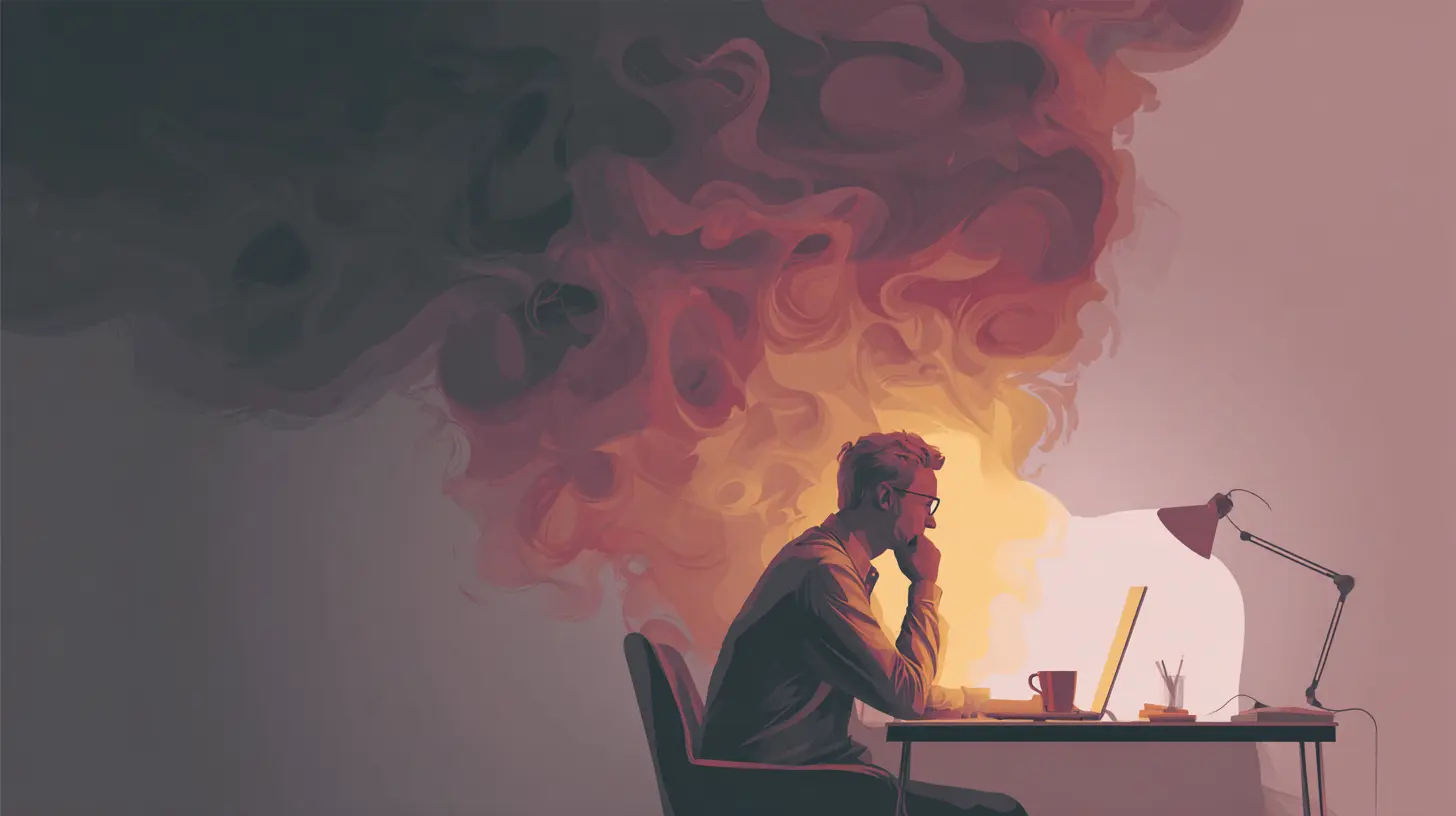
Let’s be honest for a second. How many times in the last week have you heard someone say—or maybe you’ve muttered it yourself—“I’m so burned out.” It’s become the unofficial anthem of our era, hasn’t it? A shared sigh in the break room, a knowing nod on a Zoom call, a caption under a meme about surviving Monday. But here’s the thing we need to wrap our heads around: what we’re calling “burnout” today is just the opening act. We’re not dealing with a few tired individuals; we’re in the thick of a full-blown burnout pandemic.
And a pandemic, by its very nature, evolves.
So, let’s put on our future-goggles (the non-prescription, purely speculative kind) and peer ahead to 2027. What does the landscape of our mental and emotional energy look like in just a few short years? Buckle up. It’s not all doom and gloom, but it’s definitely a call to action. Think of this not as a scary prediction, but as a weather forecast for our collective psyche—so we can learn to build better shelters.
From Buzzword to Biological Reality: Burnout Gets a Diagnosis
Right now, “burnout” lives in a weird space. It’s in our daily vocabulary, but in medical terms, it’s a bit of a ghost. The World Health Organization recognizes it as an “occupational phenomenon,” but it’s not classified as a standalone medical condition. By 2027, I believe this will have shifted dramatically.Why? Because the science is catching up. Researchers are now mapping burnout’s physical footprint on the brain and body with incredible detail. We’re talking about measurable inflammation, changes in the amygdala (our fear center), and a hormonal system that’s stuck in “fight-or-flight” so long it’s forgotten there’s an “off” switch. This isn’t just “being stressed.” This is a systemic breakdown.
By 2027, expect to see:
* Clinical Recognition: Burnout may well have its own diagnostic code in medical manuals. This isn’t about pathologizing normal stress; it’s about validating the severe, chronic state that millions are experiencing, allowing for targeted treatment and, crucially, insurance coverage for therapy and recovery programs.
* The Rise of the “Burnout Blood Panel”: Just like we check cholesterol, routine check-ups might include screening for cortisol patterns, inflammatory markers, and other biomarkers of chronic stress overload. Your doctor might say, “Your cortisol rhythm is flattened, indicating prolonged HPA-axis dysregulation,” which is basically a fancy way of saying your body’s stress engine is idling in the red zone 24/7.
In short, burnout is moving from the realm of “feeling” to the realm of “fact.” And that’s a powerful first step toward tackling it.
The Workplace: No More Ping-Pong Tables, Please
Ah, the modern office. Where the solution to soul-crushing workloads was once thought to be a foosball table and a keg of kombucha. By 2027, the facade will have fully crumbled. Employees and forward-thinking leaders are already seeing through it. The future of work won’t be about gimmicks; it will be about fundamental human redesign.Here’s what’s coming to a (hopefully flexible) workplace near you:
* The 4-Day Workweek as Standard, Not Perk: The pilot programs happening now are proving it: productivity often goes up, burnout goes down. By 2027, a 4-day workweek for the same pay won’t be a radical idea for startups; it’ll be a competitive necessity for attracting top talent. We’ll look back at the 5-day grind the way we look at 6-day workweeks of the past—a relic.
* “Right to Disconnect” Laws Go Global: France led the way. Others are following. By 2027, legislation that legally protects employees from after-hours emails and calls will be common in many countries. Your work phone will have a legally-mandated “quiet mode” after 6 PM. Imagine that!
* Output Over Hours, Finally: The great shift from “presenteeism” (butts in seats) to “output-ism” (what did you actually achieve?) will be complete. Performance reviews will be based on projects finished, problems solved, and goals met—not on how long you lingered at your desk looking suitably harried.
* Burnout Leave: Just as we have maternity and sick leave, “burnout leave” or “mental health recovery leave” will become an integrated part of comprehensive benefits packages. Taking a month to properly reset won’t be a career-killer; it will be a recognized medical necessity.
The workplace of 2027 will be forced to admit a simple truth: you cannot set a machine on fire to keep others warm. Humans need downtime to refuel.
The Tech Tango: From Problem to (Part of the) Solution
Technology, let’s face it, is a prime suspect in the burnout lineup. The always-on notification culture, the blurring of home and work, the comparison trap of social media—it’s a potent cocktail. But by 2027, the same tech that caused the wound will be selling some of the bandages. AI as the Ultimate Filter: Your email and messaging apps will have AI guardians that are ruthlessly protective of your focus. Think “Deep Focus Mode” that automatically categorizes, prioritizes, and even responds* to non-urgent communications, shielding you from the constant context-switching that fries your brain.
Wearables That Whisper Warnings: Your smartwatch won’t just tell you to stand up. It will learn your personal stress signatures—a rising heart rate variability, a change in sleep quality, a pattern of shallow breathing—and gently intervene: “Hey, your biometrics suggest rising stress. Your next 30 minutes are now cleared. Please take a walk.”* It will move from tracking fitness to safeguarding mental capacity.
* Virtual Reality Resets: Need a 15-minute mental vacation? VR won’t just be for gaming. It will offer guided, immersive nature breaks, meditation sessions on digital beaches, or calming spatial audio experiences designed to lower cortisol in real-time, right from your desk chair.
The key evolution will be tech that moves from demanding our attention to protecting our attention. It will become a boundary-setting tool, not just a boundary-blurring one.
The Personal Shift: Burnout-Proofing Becomes a Life Skill
By 2027, managing your energy will be as fundamental a life skill as managing your finances. We’ll move beyond generic “self-care” tips (though bubble baths are still lovely) and into the realm of personalized sustainability.* Micro-Restoration as a Discipline: We’ll get better at the art of the micro-break. Not scrolling on your phone, but actual, intentional 90-second resets: staring out a window, three deep breaths, a quick stretch. It will be practiced with the same seriousness as a musician practices scales.
* The End of Hustle Culture Worship: The glorification of “the grind” and “no days off” will be thoroughly passé. The new status symbol won’t be how busy you are; it will be how replenished you are. Saying “I have capacity” will be cooler than saying “I’m swamped.”
* Community Care Over Just Self-Care: We’ll recognize that burnout is not a personal failing to be solved alone. We’ll see the rise of “pod” living—small, intentional networks of friends, family, or neighbors who actively share life-loads: meal trains during busy periods, childcare swaps, or simply “I’ll handle that errand for you this week” agreements. We’ll relearn that interdependence is our natural state.
Think of it like this: we’ve been taught to optimize our phones for battery life. By 2027, we’ll finally have the tools and the cultural permission to optimize ourselves for battery life.
The Silver Lining: A More Human World
This might all sound like a lot of change, and it is. But the burnout pandemic, painful as it is, is forcing a long-overdue reckoning. It’s asking us fundamental questions: What is work for? What is a life well-lived? What do we truly need to thrive?By 2027, the collective exhaustion we feel today could be the very catalyst that births a more humane, sustainable, and frankly, more enjoyable way of being. We’re being pushed to redesign systems that were built for a different century and a different understanding of human potential.
The path to 2027 isn’t about avoiding stress—that’s impossible. It’s about building resilience systems, both external (in our workplaces and laws) and internal (in our habits and mindsets), so that stress doesn’t harden into the concrete of chronic burnout.
So, the next time you feel that familiar wave of exhaustion, don’t just dismiss it. Listen to it. It’s not just you being tired. It’s your humanity sending a signal—a signal that, if we heed it collectively, could guide us to a much brighter 2027. The cure for a pandemic isn’t just individual pills; it’s a change in the environment. And we’re all the architects of what comes next.
Let’s build a world where we don’t just expect burnout, but where we’ve systematically designed it out of the picture.
all images in this post were generated using AI tools
Category:
Emotional BurnoutAuthor:

Gloria McVicar
Discussion
rate this article
1 comments
Emmeline McWhorter
The article insightfully highlights the growing prevalence of burnout, emphasizing the need for proactive mental health strategies. By 2027, organizations must prioritize employee well-being and resilience training to combat this pervasive issue and foster healthier work environments.
April 27, 2026 at 2:58 AM
Gloria McVicar
Thank you for your thoughtful comment! I completely agree that prioritizing mental health strategies and resilience training is crucial for addressing burnout in the workplace.